The project is one of two works created for Antonello Fresu exibition “Der Körper”, displayed in the Palazzo dei Pio in Carpi as part of the initiatives promoted by the Fondazione Campo Fossoli in the winter of 2019 on the occasion of Holocaust Remembrance Day.
The installation concludes the exhibition’s path, built around several clinical records compiled by the American army in 1945 based on Adolf Hitler’s medical reports.
The sound of the heart, reconstructed from the original electrocardiograms, accompanies the visitor in a dark room. On the screens of various cathode-ray tube televisions, the different traces that make up the ECG scroll synchronized but separated from each other.
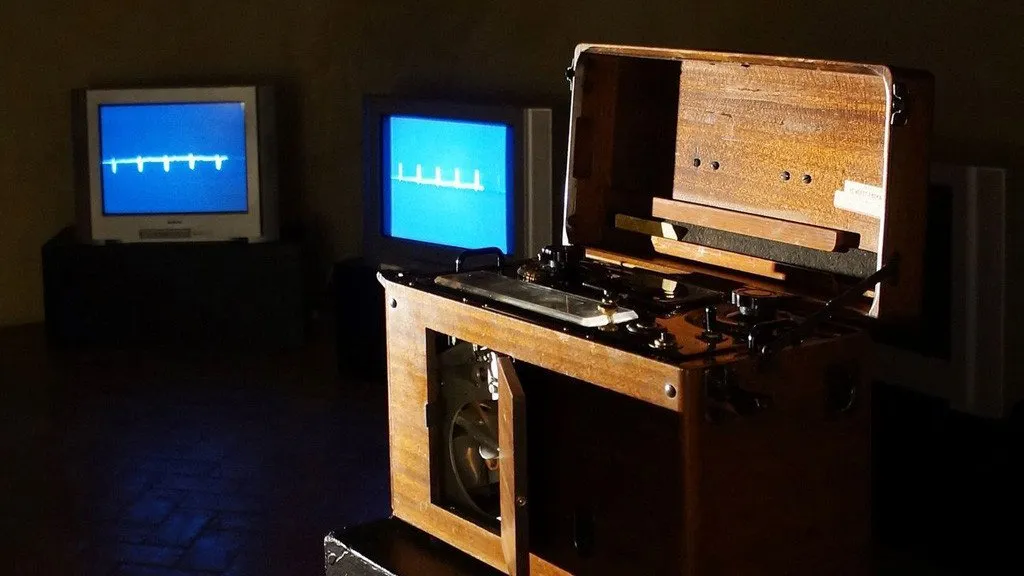
The focus of this work was the creation of the videos and the design of a system for the synchronized reproduction of sound and images on multiple screens.
During the design phase, it was not clear which and how many exhibition spaces there would be, whether it would be possible to connect the screens to a centralized video source, nor their number in the final setup.
The solution implemented was therefore to create a modular system that would allow adding or removing screens at any time without special wiring, except for the power supply of the televisions.
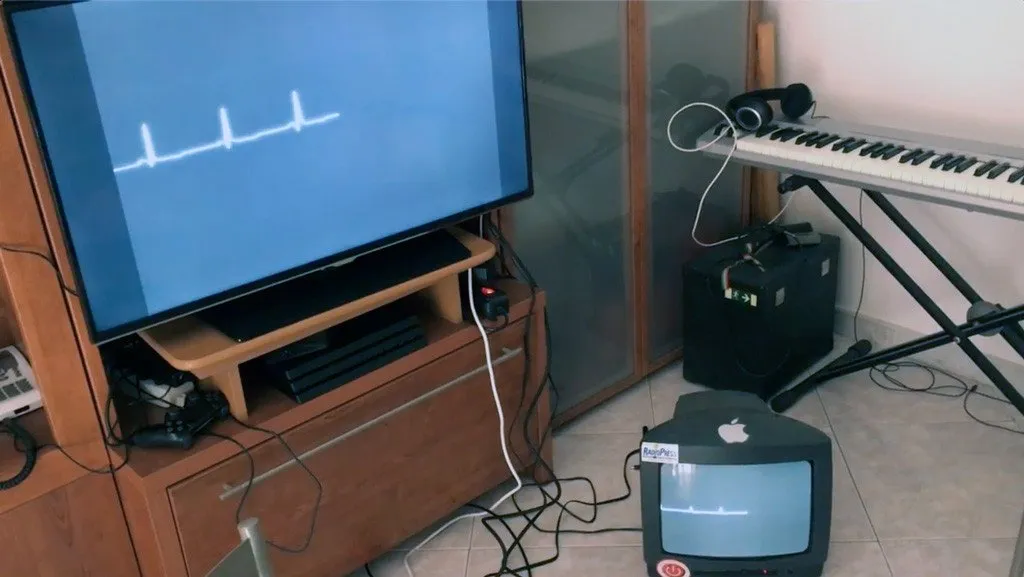
Each television was connected directly to a Raspberry PI that contained the video to be played on that particular screen; each controller was configured so that at startup it would connect to a WiFi network and listen for a synchronization signal.
An additional Raspberry was responsible for managing the audio and sending the synchronization signal to the various slaves so as to start the video playback simultaneously and reset the loop each time they ended. Ideally, there is no limit to the number of screens that can be added to this configuration.
Since each screen is responsible for playing its own video, there are no problems even with particularly high resolutions because the only message traveling on the network is the synchronization signal.
Tech
- Raspberry PI
- OMX Player
- socket.io
- Adobe After Effects
Links